Choosing Quieter Corridors for Loaded Rides
Busier corridors are easy to pick and hard to enjoy with bags on the bike. This guide shows how to find quieter parallels, judge shoulder quality, and ride unavoidable busy stretches with steadier pacing and clearer visibility habits on the line.
Why the obvious road is rarely the best loaded option
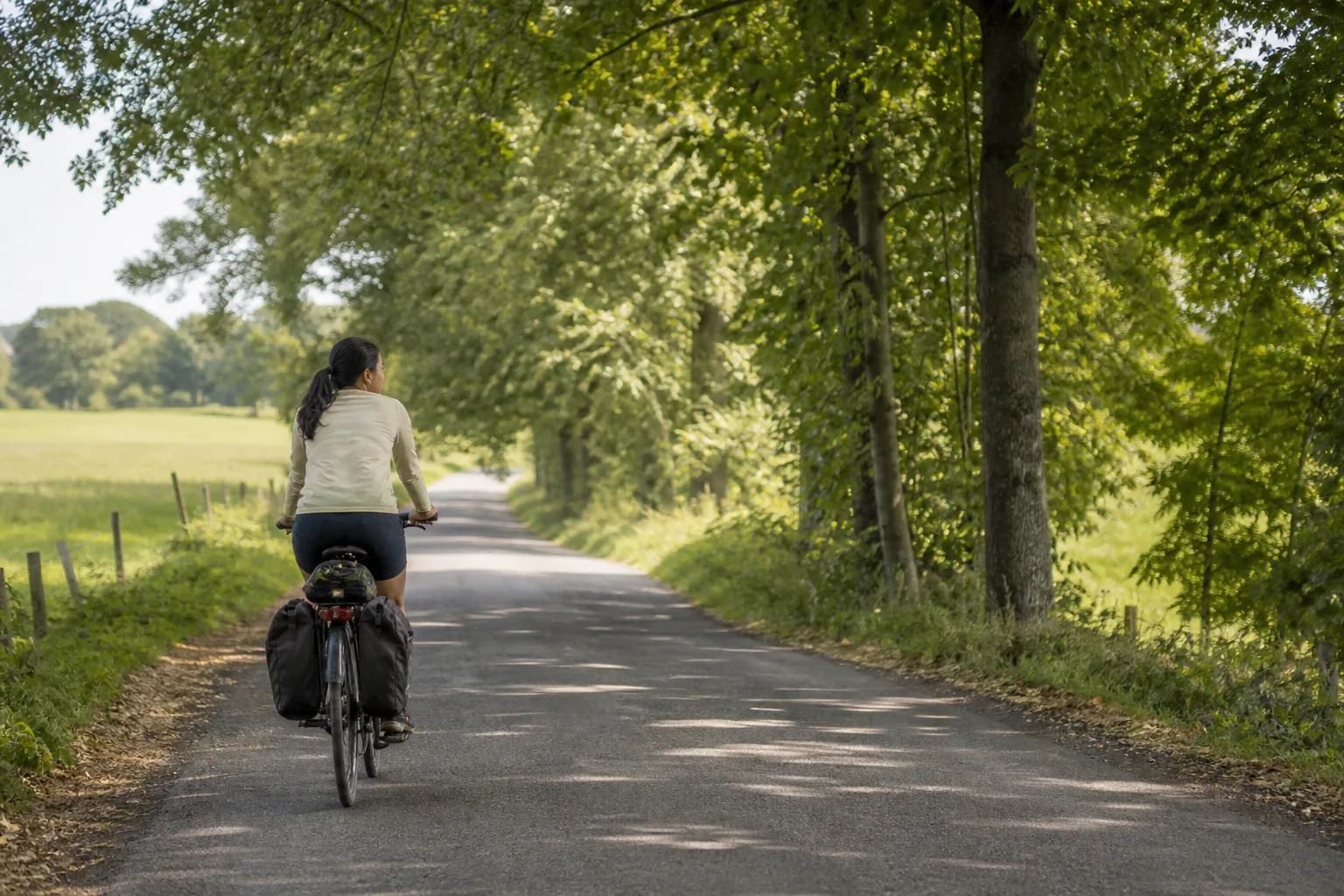
The main marked corridor often wins on maps because it looks continuous and familiar. For a loaded bicycle, continuity is only useful if vehicle volume, shoulder quality, and turning opportunities still leave you room to ride calmly. A quieter parallel lane can add a few turns and still save attention, energy, and stress across the whole stage.
Quieter does not always mean scenic. It means predictable. You want enough space to hold a stable line, enough gaps to enter driveways or farm pull-offs if needed, and surface quality that does not punish a touring tire with constant vibration. Those qualities matter more than whether the road appears first on a default routing suggestion from an app.
Before you leave, compare the main option with at least one alternative that stays near the same towns. If the alternative fails on food access or creates a dead-end, keep the main road. If it only asks for a little more navigation while reducing traffic conflict, take that option seriously.
How to scout calmer parallel corridors
Start with map layers that show local connectors, not only numbered highways. Look for roads that shadow the main corridor through farmland or residential edges. Then check recent traveler notes and satellite texture for shoulder width, tree cover that hides sightlines, and places where the lane narrows at a bridge.
Next, judge junctions. A quiet road that forces repeated awkward merges back onto a fast corridor may cost more than it saves. Prefer alternatives that keep you on calmer pavement for meaningful stretches, with clean re-entry points when you have to reconnect.
- List the main corridor and one or two parallel candidates between the same overnight points.
- Compare shoulder clues, intersection density, and known heavy-vehicle patterns.
- Mark any segment where no quieter option exists and plan visibility habits there in advance.
- Choose the line that keeps the largest share of the day below high-conflict traffic.
- Write bailout reconnect points so a blocked lane does not strand the whole stage.
A quieter corridor earns its place when it reduces conflict for most of the day, not when it looks prettier for a short photograph pause.
Reading shoulder quality before you trust it
A painted line is not a shoulder. Look for actual width, surface break-up, debris bands, and whether the edge drops sharply into gravel. Loaded bikes need room to hold a straight line without dancing around broken asphalt. If the shoulder disappears at every bridge or curve, treat those points as short high-alert zones even on an otherwise calm stretch.
Also watch for intermittent parking and driveway churn. A quiet lane with constant reversing vehicles can feel less stable than a wider road with steadier flow. The goal is fewer surprises, not silence at any cost.
- Prefer continuous edges over stop-start fragments of pavement.
- Note bridge pinches and plan to claim a clear line early.
- Avoid routes where soft gravel shoulders invite a sudden wheel drop.
- Keep one reconnect strategy if the quiet lane is closed by work crews.
When a busier segment is unavoidable
Some stages have no clean detour. In those stretches, change behavior instead of hoping the road will soften. Ride a predictable line, use lighting even in daytime haze if visibility is poor, and keep group or solo spacing that drivers can read. Pass through rather than lingering at awkward edges of the lane.
Pace matters. A loaded bike accelerating out of every driveway conflict burns focus. Choose a tempo you can hold without weaving. If a climb sits on the busy segment, accept a slower cadence early rather than standing and swinging across the lane when traffic shows up.
A short visibility checklist
Before the busy piece begins, confirm lights, reflective elements, and that bags do not block lamp output. Check that mirrors or shoulder glances are part of your rhythm. Then decide where you will pause if the lane becomes too compressed: a wide entrance, a signed pull-out, or a side street that lets traffic clear.
After the segment ends, do not immediately relax into casual riding if the next junction still feeds the same corridor. Transition deliberately back to the quieter line you planned. Many near-misses happen in the handoff between high-alert and low-alert riding.
Build the day around conflict budgets
Think of traffic conflict as a budget, similar to climb cost. You can accept a short expensive segment if the rest of the day is calm. You should avoid stacking multiple high-conflict pieces with no recovery between them. Map the day as quiet, mixed, and unavoidable blocks, then rearrange towns or direction when the expensive blocks sit too close together.
This approach also improves conversations with riding partners. Instead of arguing about which road feels nicer, you can compare how much of the day each option spends in unavoidable conflict. The clearer metric usually ends the debate faster and produces a stage people can finish without frayed attention.
Finally, revisit your corridor choice after the first real traffic hour. If the quiet alternative is slower but keeps your shoulders down and your line stable, it is doing the job. Loaded travel rewards roads that let you keep thinking about the route, not roads that force you to negotiate every vehicle as an emergency.
Keep notes on which connectors felt trustworthy and which only looked quiet on paper. Those notes become your private library for the next region with similar road patterns, and they shorten planning time without making you dependent on a single default route.
Turning corridor choice into a repeatable habit
After a few stages, quieter-road selection should stop feeling like a special project. Build a short evening routine: mark tomorrow’s unavoidable busy piece, mark the longest calm stretch, and mark one reconnect if the calm stretch fails. That three-part sketch is enough to keep the day from defaulting back to the noisiest continuous line.
Share the sketch with anyone riding with you. Agreement is easier when everyone can see where patience is required and where the plan expects relief. It also reduces mid-ride debates at junctions when traffic is already close and decisions need to be quick.
Over time you will recognize patterns: industrial edges that look short and feel long, farm lanes that look slow and feel generous, bridges that always pinch, and towns where the quiet exit sits one street farther than the obvious outbound arrow. Capturing those patterns is how corridor choice becomes craft instead of luck.
The reward is practical. A loaded bike on a calmer line preserves attention for surface changes, navigation, and the simple pleasure of watching the land change at bicycle speed. That is the point of choosing the road carefully before the wheels start turning.
If a planned quiet connector disappoints, do not treat the whole method as failed. Note the mismatch, reconnect cleanly, and keep the next decision based on observed traffic rather than frustration. Corridor craft improves through correction, not through loyalty to a line that no longer serves the day.
Used consistently, this approach turns road choice into part of touring readiness alongside elevation and packing. The bike stays steadier, conversations stay calmer, and the day keeps enough attention left for the details that actually decide whether you arrive well.