Shaping a First Multi-Day Loop
A first multi-day trip stays controllable when the route shape forgives mistakes. See why a shorter loop beats a long linear push, how to place bailout towns, and how to keep day two realistic after the excitement of leaving.
Why a loop forgives first-trip mistakes
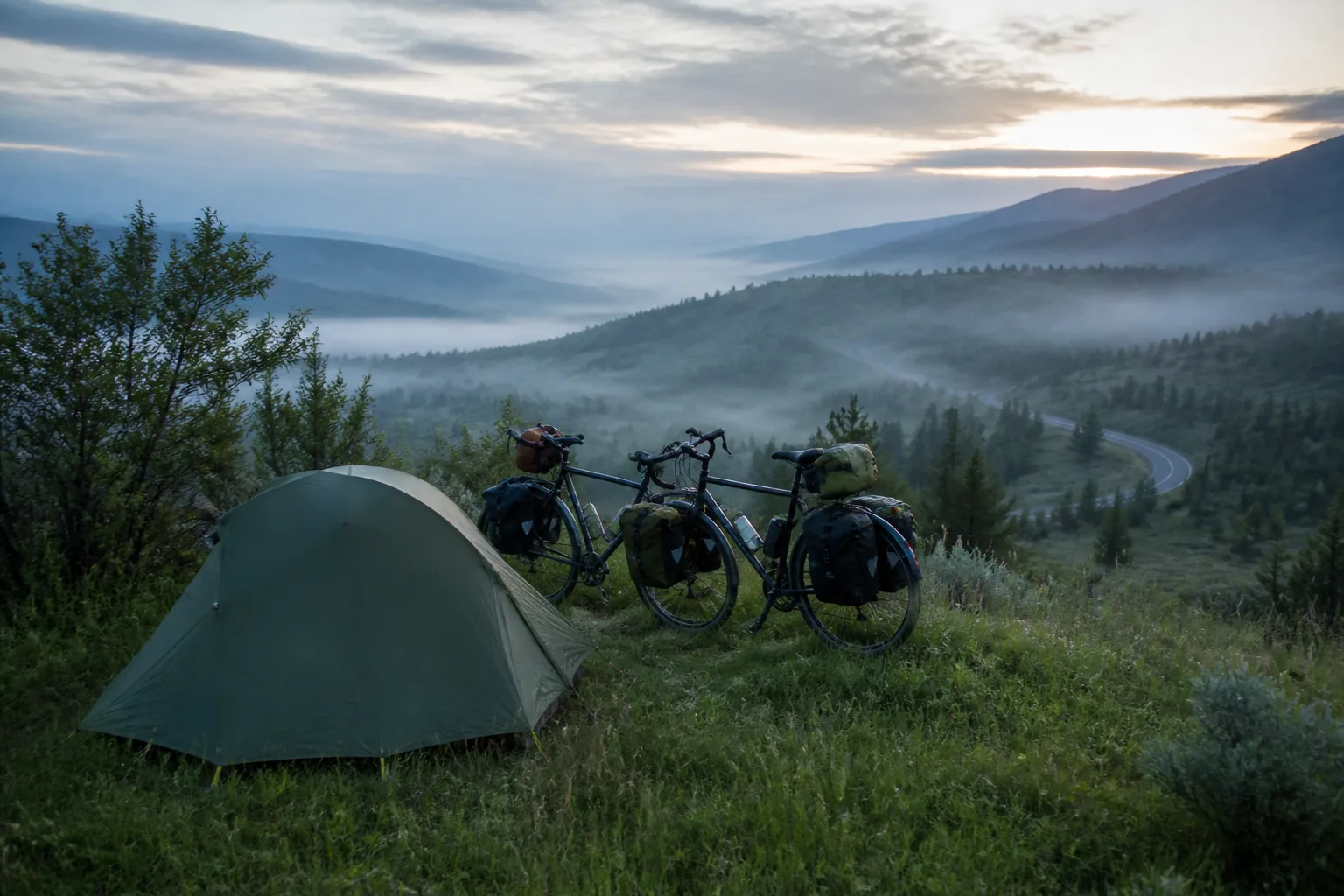
A first multi-day ride often fails because the plan is shaped like a story: leave point A, arrive at distant point B, and never look back. That linear shape punishes early misreads of distance, packing, or weather. A shorter loop gives return options, repeated service access, and a psychological safety net when day one teaches harder lessons than expected.
Loops are not less serious. They are more instructional. You can test loaded pace on day one, sleep, and adjust day two without abandoning the whole journey. If a climb or surface surprises you, the geometry of a loop often offers a shorter revised circuit instead of an expensive rescue transfer out.
The best first loops are modest in ambition and rich in bailouts. Choose a shape that keeps towns within reach and avoids a single long no-exit arm. The aim is a complete overnight experience with enough flexibility to stay in control.
Choosing distance before choosing drama
Begin with how far you already ride with bags in ordinary conditions, then reduce it for touring unknowns: navigation pauses, food stops, and the simple fatigue of new routines. A first loop should leave margin after arrival for pitching, cooking, or a bike check. If the plan only works when every hour is perfect, the distance is too long.
Split the loop into day stages that each have a clear finish, not a vague hope of making miles. Day one can be shorter on purpose so you learn how the loaded bike feels before committing to the hardest arc. Day two can absorb a slightly longer segment once packing and pacing are no longer just theory.
- Set a conservative daily range based on recent loaded rides, not empty-bike fitness memory.
- Place the most uncertain surface or climb where a bailout town still sits nearby.
- Keep overnight options flexible enough that weather can shorten a stage.
- Avoid a final day that demands a heroic push to close the loop at all costs.
- Write a reduced version of the loop in advance so adjustments are ready, not improvised.
A first loop succeeds when you finish with judgment intact. Distance bragging is not the metric; controllable arrivals are the measure.
Bailout towns and why they belong on the sheet
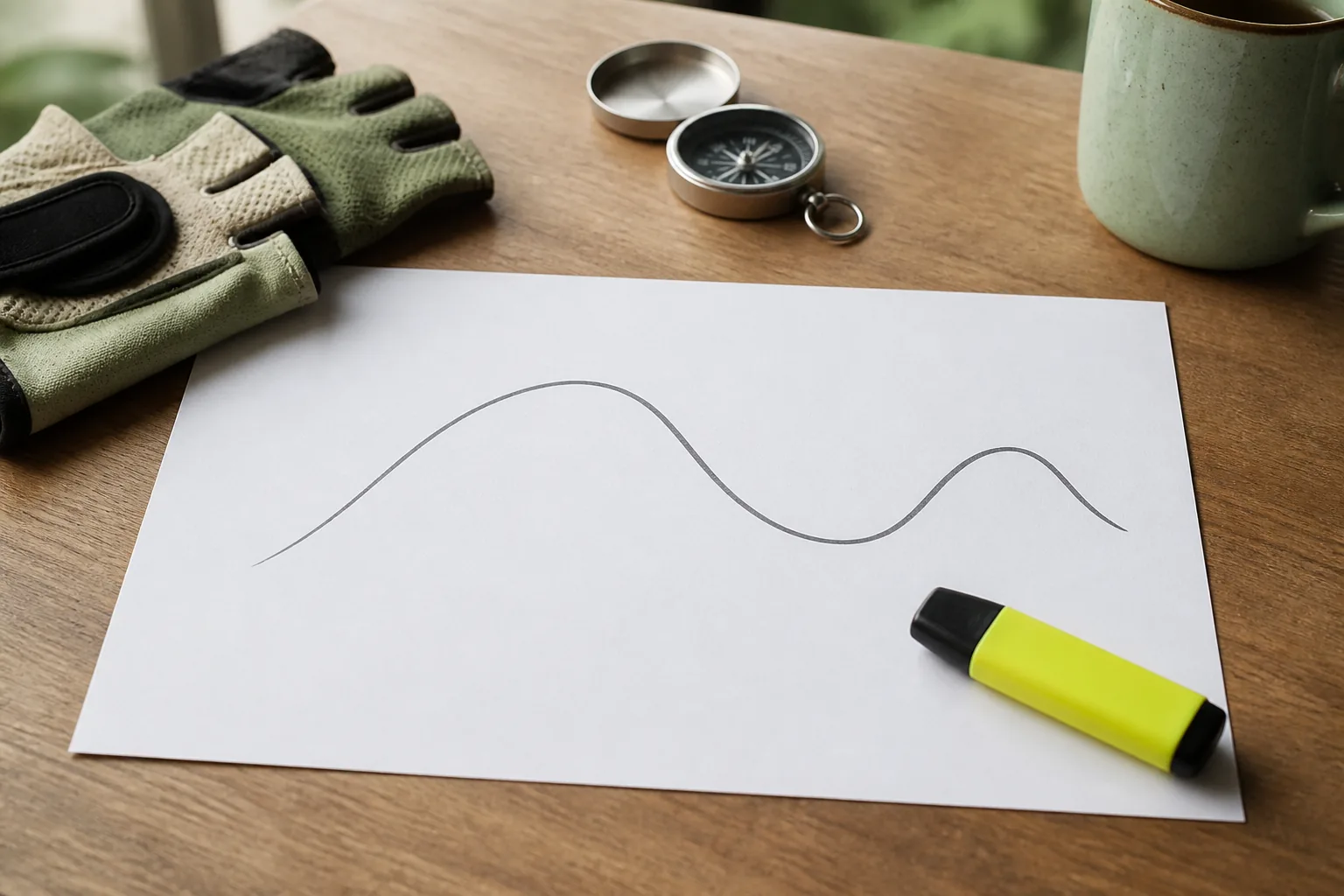
Mark every town that can absorb a change: lodging, food, or a sensible pause. Then note which ones you can reach if you abandon the long arc after lunch. Bailouts are not signs of weak planning. They are the structure that keeps a first trip from turning one hard afternoon into a cascade of failures.
On a loop, bailouts often appear on both sides of your position, which is exactly the advantage. You can shorten clockwise, reverse to a known service point, or cut across a connector if one exists. Linear routes usually offer only forward motion or expensive retreat.
- List water and food gaps longer than your comfortable range.
- Identify one early-turn option after the first major climb cluster.
- Confirm that at least one overnight alternative does not depend on a single booking.
- Keep transit information for the start town in case you end early and need a reset.
Protecting day two from day-one excitement
Day one energy is real and misleading. New bags, new scenery, and the relief of finally starting can push mileage beyond what recovery will support overnight. The loop helps only if you still choose restraint. Plan day one as a teaching stage: learn rolling speed, packing quirks, and how long stops actually consume.
Before sleep, revise day two with evidence from the day you just rode. If climbs cost more than expected, shorten. If packing shifted and handling felt nervous, fix the load before adding distance. The second day should be a calibrated step, not a revenge push against the first day's fatigue.
A simple overnight review
Ask three questions: Where did time disappear, where did the bike feel unstable, and where did hunger or heat arrive earlier than planned. Write answers in one short note. Those answers are the brief for tomorrow’s stage and are more valuable than any generic checklist copied from someone else’s trip.
If the review says the loop is already at your limit, use the reduced version you prepared. Closing a smaller circuit with composure beats forcing the original outline and arriving depleted. First multi-day travel is a skills school; completion with control is the lesson.
Shape the loop so logistics stay boring
Boring logistics are a gift. Choose start points with easy bicycle handling on arrival and departure. Keep the first resupply early enough that packing mistakes can be corrected. Avoid building the whole trip around one rare ferry or one tightly timed handoff that turns a slow coffee stop into a crisis.
Also leave room for weather. A loop with multiple acceptable overnight nodes lets rain shorten a day without ending the trip. That flexibility is harder to find on a linear corridor where lodging and distance are locked in a single direction.
When you draw the shape, look for symmetry of effort rather than symmetry on the map. One hard day and one gentler day often works better than two identically ambitious arcs. Your body adapts across nights; your plan should respect that curve instead of pretending every morning starts equal.
After the trip, keep the loop outline with real notes: which connector was worth it, which town saved the plan, and which distance estimate was fantasy. That record becomes the template for the next loop, slightly longer or more remote, built on evidence rather than excitement alone.
A well-shaped first loop teaches packing, pacing, and decision-making under manageable stakes. It also preserves the desire to go again. That combination — skills gained and appetite intact — is the real marker that the trip design worked.
If you later move to linear routes, you will carry loop habits with you: bailout thinking, day-two revision, and a refusal to let opening excitement write the whole itinerary. Those habits travel well beyond any single circuit.
Packing and pacing cues unique to loop starts
Because a loop often returns near known services, people sometimes overpack “just in case” and then pay for that weight on every climb. Invert the logic. Use the proximity of services to pack tighter, then add only what the first overnight truly requires. If something is missing, the loop geometry usually makes correction cheaper than on a remote linear arm.
Pacing cues should be written onto the loop map itself. Mark where you expect the first real hunger window, where a climb cluster demands an early snack, and where a town stop should be treated as maintenance rather than celebration. First trips lose time in unstructured lingering; a loop with timed intentions stays kinder.
Also decide in advance what “enough” looks like for weather. If rain arrives early, which shortened loop still counts as a complete overnight journey? If wind dominates one arc, which direction keeps the worst exposure shorter? Answering those questions before departure prevents pride from making the only decision available in the moment.
At the end of the loop, separate souvenirs from systems. Keep the systems: the reduced plan, the bailout list, the overnight review questions, and the distance estimates that proved true. Leave behind the urge to impress anyone with how far the first version stretched on paper.
A strong first loop is quiet in the retelling and rich in transferable skill. You come home knowing how your loaded pace behaves, how your packing shifts, and how quickly plans should bend. That knowledge is the real distance covered, and it prepares the next trip better than any forced linear milestone could.
When friends ask where to begin, offer them shape before scenery. Help them draw a modest circuit with exits, then let the land do the teaching inside a plan that can still be finished with grace. That is how first multi-day travel becomes a practice people repeat instead of a story about what went wrong after the first ambitious push.
Closing the loop without forcing the ending
The final morning of a first loop tempts people to “make it neat” at any cost. Resist that urge if weather, fatigue, or a mechanical issue argues otherwise. A slightly altered finish that keeps everyone safe and the bike rideable is still a completed apprenticeship. Neatness on the map is optional; judgment is not.
Before the last stage, restate the non-negotiables: daylight buffer, food access, and a repair margin. If the original closing arc violates those, use the reduced circuit or an earlier return. You are training a decision standard you will need on harder trips later, when the stakes and distances grow.
After you are home, write one page that a future self can reuse: loop shape, real daily distances, where the plan bent, and which bailout earned its ink. That page is the bridge from a first overnight circuit to the next, more confident journey.
Then give yourself credit for the unglamorous wins: the earlier stop you chose, the bag you rebalanced before day two, the connector you skipped when it felt wrong. Those choices are the curriculum. Scenery will still be there on later trips; judgment has to be practiced early while the route still forgives you.
A first loop designed this way does not merely get you around a circuit. It installs a way of planning that keeps future journeys honest, adjustable, and finishable when conditions disagree with the first draft you drew.